
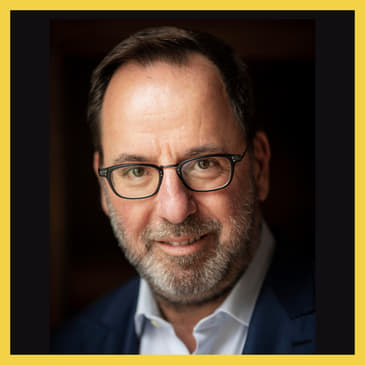
In this episode, we meet Flavio Bucciarelli from Erqole, discussing his background in hospitality, the unique offerings of the Erqole Group, and the company's philosophy of personalised service through storytelling.
Flavio shares insights into the target audience for their luxury properties in Porto Ercole, the importance of local employment, and the authentic, exciting and relaxing activities available for guests. Finally, we discover how Flavio has hospitality in his blood and we also hear about his own travel preferences with his family.
Flavio mentioned a recent article by Conde Naste about Porto Ercole. Here it is.
Chapters
00:00 Flavio Bucciarelli's Background in Hospitality
03:14 Overview of Erqole Group and Its Vision
06:55 Target Audience and Unique Selling Points
12:44 The Philosophy of Storytelling in Service
17:04 Activities and Experiences Offered
20:20 Flavio's message to Travel Buyers and Planners
26:29 Flavio's Personal Travel Insights
Keywords
hospitality, Erqole Group, travel, luxury, Porto Ercole, Italy, storytelling, customer experience, travel planning, agritourism
[00:00:00] Hello and welcome to the Journeys Profile podcast. Today I'm joined by Flavio from Erqole Group. Flavio, you're very welcome.
[00:00:07] Thank you, thank you everybody. Thank you, Ewan, for inviting me.
[00:00:09] It's great to have you here, Flavio. But first off, can you give us an overview of yourself? What's your background? How did you get to here?
[00:00:15] I don't usually like to talk about me, but let me try and make it quick and unpainful. So I've actually been in the industry for 30 years, which makes me look even older.
[00:00:25] But I've started my career in hospitality in Rome and then spent 20 years with Starwood Hotels and Resorts.
[00:00:34] And moved in five different countries from Milan to the UK, to the Algarve, to Paris and France, and then to Brussels.
[00:00:43] Starting in sales and marketing and moving into operations. And then when I left Starwood, then I came across the current owner,
[00:00:53] the Johnson family of the Erqole Group, but more broadly about the Carbo Group.
[00:00:59] And I fell in love with their vision and we started off with a little project and now it's growing into something more substantial.
[00:01:08] So that's where I spent my last seven years.
[00:01:11] Now I'd like to come to learn more about the group, but just before, have you always, am I right in hearing then, you've always been in hospitality? Is that right, Flavio?
[00:01:20] I, the most part of my life, yes. But actually a little anecdote is that when I did, when I was studying, I finished my studies, I did an MBA.
[00:01:28] Then I spent one year doing consultancy for the healthcare in Italy, for the home care assistance project that was at that time,
[00:01:38] sponsored by the government to be able to basically cure patients at home rather than in hospital.
[00:01:44] So I actually had, had a little bit of a start in a different area, which was hospital. And then I went to hospitality.
[00:01:51] So it's sort of close. It's still taking care of people and looking after them.
[00:01:56] Is that a feature there, Flavio? I'm just, I'm keen to understand what drew you to hospitality?
[00:02:01] Well, great question. Actually, I have, I had hospitality in my blood all since my dad was in hospitality.
[00:02:08] He was there with the Chiga group, which was the, the now luxury collection. At that time, Chiga was the four seasons in Italy.
[00:02:16] It had 20 of the most iconic hotels from the Excelsior in Rome, in Florence, the Daniele.
[00:02:21] And my dad spent 30 years in, in, in the, in, in actually Chiga and moving around. So I grew up every four years.
[00:02:29] We used to do get our, you know, pack our stuff and move from Rome, Florence in Milan twice in my childhood.
[00:02:35] So I had hospitality. And then one day, my dad is 16 years old. He said, son, now it's time that you start working a bit and not have fun just in the summer.
[00:02:42] So he sent me doing internships. And so I had the hospitality in my blood, but then, you know, my dad was very renowned.
[00:02:51] And that, in his time in the hospitality world. And so I didn't want to create a duplicate. I didn't want to create, you know, always be benchmarked.
[00:02:58] If you were good. Yeah. You're good because your dad was good. If you're bad, your dad was better. Right.
[00:03:02] So I thought, let me keep out of this, but then really came out of an event at dinner that I was literally drawn back to hospitality casually.
[00:03:11] And then 30 years later, here I am.
[00:03:14] Fantastic, Flavio. Fantastic. Okay. Take us, take us then to the company. Give us an overview of, of the group and what,
[00:03:20] what particularly should we be focusing on today?
[00:03:22] Yes. So the group Ercole, which is part of the broader group Carbo Hospitality, is a Swedish owned group.
[00:03:29] A family, the Johnson family owns the Carbo group. And within the Carbo group, there's a, there's a pillar, which is the hospitality.
[00:03:38] And in this particular case. So the group has hotels in Stockholm, Sweden, but also now we're creating a luxury destination in Porto Ercole.
[00:03:51] And the story is actually a very romantic story. I, I met the owner of the Johnson family seven years ago, and they had just bought a disused fish sardine factory.
[00:04:03] Now, really, I mean, you'll laugh, but it is still is actually a disused sardine factory, which actually flows 40 years ago this year in the middle of Porto Ercole.
[00:04:14] And Porto Ercole is a beautiful fishing village in, in an island that is connected by a bridge to the mainland. So you drive onto it, one and a half hours north of Rome and southern Tuscany.
[00:04:27] So island connected to the, to the mainland, southern Tuscany and north of Rome. And so just those three pillars, just, just, and it's a beautiful location. It was once, it was a place to be in the 1970s and 1980s.
[00:04:44] And then it fell a little bit in oblivion. It was the Portofino, it was the Capri, all the VIPs, the dignitaries, the Queen of Holland was here, you know, all, it was really the place to be.
[00:04:53] So the view was initially just to transform this ex-sardine factory into a hotel. So I started working with the family and helping them into crystallizing their vision.
[00:05:06] And then as it comes, then we bought another hotel in 2020, which was a three star property on the other side of the village, transformed it into a luxury property, which is today La Rocca, part of small luxury hotel, which opened last year in, in, in mid August.
[00:05:23] And so this year we have the full season. And then we bought, this year, we bought another property, Cala Piccola, Tore di Cala Piccola, which is an iconic property on the other side of the island with the best sunset in the world.
[00:05:35] And I really mean it. It is iconic on the island of Giglio, which is unfortunately known for the capsizing of the, of the ship, the Costa Concordia.
[00:05:44] But that's unfortunately where it claims to fame, but it's got the most beautiful sunset.
[00:05:50] So we have, so we now have three properties on the island. One is a project, two is will be a renovation and three is a luxury property with the only beach club, the only sandy beach club in the island behind the hotel.
[00:06:04] So we have also this great asset. And just to conclude, what we wanted to create is for our guests is to create a, an experience where they could live also the beach side, but also the countryside experience of Southern Tuscany.
[00:06:16] So we were lucky enough to find a stunning property, 18th century villa with 22 hectares of land. It's, it's agritourism now with, we produce our own wine, our own olive oil and also our vegetable garden.
[00:06:34] And so it is only 40 minutes away. So the guests can, we'll be able, because now we are, we're starting the renovation.
[00:06:42] We'll be able to either spend two days here and there or three days in the beach, by the beach and three days in the countryside or wake up in the morning and say today, I want to go.
[00:06:52] And like today, literally today we're starting the harvest of our wine of, so we, you know, just wake up, go up, do the harvest and come back.
[00:06:59] So we will be at the moment where the only group in Italy that has these two experiences, countryside and beach side, only a half an hour away.
[00:07:08] So others have it, but much more distance. We have compacted, you know, brought together these two experiences.
[00:07:14] And once again, you know, you land in Rome and one and a half hours later, you're here.
[00:07:19] Flavio, you've given a hint then of the type of profile of customer there, because customers are thinking we want that beach experience, that fantastic sunset.
[00:07:28] But also the agritourism aspect there. Would you say some more about the type of the type or the typical type of clients you're you're aiming to attract and you're seeing coming through the doors?
[00:07:39] Yeah, I want to start with, you know, sometimes timing is about everything and sometimes you need to be lucky because this morning on the nice traveler in there.
[00:07:47] In their newsletter, the first article says the underrated Italian town that's becoming Europe's chicest destination and it's Porto Hercole.
[00:08:01] Honestly, you cannot make it up because, I mean, today having this opportunity to speak to you with this headline.
[00:08:08] And why is it important? Because it is underrated. It is a bit of a place to hide away, to hide away.
[00:08:16] It's not there's no over tourism. It's a calm fishing village, fishing island with a lot of a great nature, a great assets.
[00:08:27] And it's a place that you need to discover. And that's really the beauty about about the destination, about the uniqueness of the destination.
[00:08:36] But we were so excited this morning because just to read it and we've had some great coverage.
[00:08:40] But this is underlines really the fact that it is a new destination.
[00:08:45] And I'm talking to a lot of luxury travel designers.
[00:08:49] And this is a place where your guests will come and say, take me somewhere I haven't been or, you know, make me go somewhere I haven't been.
[00:08:58] Right. This is the place where you have been still.
[00:09:02] But it's a place it's to discover. And there's so much to discover, which we will say, which I will tell you in a bit.
[00:09:10] A little bit more about who you're expecting to come through the doors.
[00:09:14] Yeah. I mean, we are expecting and we have expecting and we've had because we are in the first full season.
[00:09:19] So we had a great summer. You know, we have added a luxury property in the destination and we've generated new demand for the destination,
[00:09:29] which is important because for us, you know, the La Rocca Hotel, as I said before, which just opened, we are a window to the destination.
[00:09:38] We are we it's a beautiful property redesigned by the Italian designers, Palomba Serafini.
[00:09:44] There were two with two main pillars, the Dolce Vita, the 1960s Dolce Vita and the colors of Southern Tuscany.
[00:09:51] So bringing in the colors of Southern Tuscany and giving a hint of the 1960s Dolce Vita design in a modern way.
[00:09:58] But all of this done in a very understated way where our motto is understated luxury and it's a soft tone of voice.
[00:10:07] And most of all, it's about, you know, the ultimate personalization of the service.
[00:10:12] I know everybody talks about personalization of service, but what we've what we really focused on is the training of our staff.
[00:10:19] By the way, this is not only a hotel project, it's a it's a more of a destination project for us.
[00:10:25] And it's a social project. We employ 80 percent of the staff locally.
[00:10:30] So which, you know, so we give back to the destination.
[00:10:33] We employ them, we train them, we teach them English, which is something, as we know, you come into Italy.
[00:10:38] It's not always something that people are familiar with because, unfortunately, it's not very well taught in school.
[00:10:44] So we invest in these in these young boys and girls. And so we're giving back to them.
[00:10:50] We have an affiliation with a social farm which employs otherwise able boys and girls.
[00:10:57] And we plant we plant the tomatoes and vegetables, which we then go and pick up to use in our kitchen.
[00:11:04] But we also bring guests there. So we have we have had guests last week and said, I want to go and I want to see and I want to pick my tomatoes.
[00:11:11] So we took them there. They went. The chef went there and they had the most wonderful salad under a little gazebo and really spending the day in a very authentic and real way.
[00:11:23] So the beauty about all of this is all the stories that we tell in the destination are real, authentic stories about men and women of the territory.
[00:11:32] And that's when it comes back about the service.
[00:11:36] When guests enter the hotel, they are welcomed by our storytellers.
[00:11:41] We call the guests. We call our staff storytellers. And yeah, I can see you frowning.
[00:11:45] Why is that? Because we we want them to be a storyteller of the destination of themselves.
[00:11:51] Where where have they come from and what are the beauties about the destination?
[00:11:54] Not necessarily about we have one of the nicest restaurants, the best bar.
[00:11:58] It's not about that. You come to us, you and the guests of all our listeners are coming because they want to explore.
[00:12:06] They want to explore the town, the fishing village and the destination, the wineries, the biking trails, the hiking trails.
[00:12:13] And so every member of staff is so-called trained to tell a story.
[00:12:18] And it's also about themselves because we've brought back boys and girls that were in Dubai, in Prague, in London for seasons.
[00:12:29] They were born here, but they had to go away to find a job that would suit them.
[00:12:33] So we brought them back. So now they're happy to have a valuable, what they believe is a valuable project.
[00:12:39] But they're back home with their parents. So we've also brought people back to their hometown.
[00:12:44] The underlying philosophy there, Flavio, of storytellers, I think is really, really fascinating.
[00:12:49] But you can you can do that because, as you say, you're bringing these individuals back or you're harming locally.
[00:12:56] Would you say a few words about that that vision and that philosophy in the context of maybe some other five star luxury,
[00:13:05] but perhaps a little faceless, right?
[00:13:08] Or perhaps a little more faceless where individuals will come from everywhere.
[00:13:11] Where here you're stepping into the local area.
[00:13:15] Say some more words on that, please.
[00:13:16] Yeah, I'd rather I don't want to talk about others because, I mean, everybody's different and unique, right?
[00:13:22] But what I can say is our best gift was last year we opened, unfortunately, on the 14th of August.
[00:13:29] Unfortunately, because we basically were late with all of the, as you know, project construction.
[00:13:34] They always get a little bit late. So we're a couple of months late.
[00:13:37] But we opened and actually we hired everybody in May.
[00:13:41] So we trained them for two and a half months, right? Really to the T.
[00:13:45] So when we opened, we actually received the keys by the construction company five days before opening,
[00:13:52] which is I've been in 30 years in the business.
[00:13:54] I've never opened a hotel in five days.
[00:13:56] So we, but we were adamant and we were ready.
[00:13:59] So the doors opened.
[00:14:00] And the next day, one, a very, very refined journalist of an important Italian newspaper was coming to visit us.
[00:14:10] And I was like, with our PR agency, are we sure?
[00:14:13] I mean, to Flavio, don't worry.
[00:14:14] He comes in peace.
[00:14:15] You know, he's going to be, he's going to be all right.
[00:14:19] And I met him the day he arrived, met him upstairs.
[00:14:22] And we have a beautiful rooftop terrace where we have a bar and a restaurant on overlooking the village.
[00:14:29] So I met him.
[00:14:29] I said, welcome.
[00:14:30] And the first thing he said, he said, Flavio, the minute I entered, I empathized with your staff.
[00:14:36] And I thought, what a word.
[00:14:39] I mean, you couldn't, I said, you could not make me happier because I said, the minute I arrived, I empathized with your staff.
[00:14:46] They were engaging.
[00:14:47] They were soft-toned.
[00:14:48] They were interested about me.
[00:14:49] They were telling.
[00:14:50] They were not too much, not too little.
[00:14:52] And the whole experience of arrival was just beautiful because we don't have a front desk.
[00:14:58] We don't, we just have two floors, the ground floor and the mezzanine with lounges, with a bar.
[00:15:03] You arrive, and the guests that will arrive, you're welcome in open arms and say, would you like to have a little coffee or an aperitifo?
[00:15:11] In the meantime, we process your check-in.
[00:15:14] Or you just say, look, I'm so tired.
[00:15:16] I've traveled 15 hours.
[00:15:18] Just take me to the room.
[00:15:19] No problem.
[00:15:20] And you go to the room.
[00:15:21] So there's no queuing up at front desk.
[00:15:23] There's no give me the document.
[00:15:24] Give me this and give me that.
[00:15:25] We just, it's supposed to be flawless.
[00:15:29] But actually, our guests tell us it's flawless.
[00:15:31] So our reviews are telling us that.
[00:15:33] So it's not only us telling ourselves, we're not self-proclaiming ourselves.
[00:15:36] But it's, so it's a walking in at home.
[00:15:38] You're welcome in open arms.
[00:15:40] And people are genuinely happy to see you.
[00:15:42] So we're at the end of our, at the end of this season, the first season.
[00:15:47] And it's been a very interesting season.
[00:15:50] Because one other thing for us is to connect also with the locals who come here.
[00:15:55] So not only bringing in new guests.
[00:15:59] And we have guests from the US, the UK, from the Nordics, from Germany, from France, from Brazil.
[00:16:06] And so very international clientele.
[00:16:10] Very refined, very understated.
[00:16:13] We have one very strong strategy in terms of everything from imagery to tone of voice.
[00:16:18] We try to project that, right?
[00:16:20] But the ultimate prize for us is to actually attract those actually that we want.
[00:16:26] And I repeat, you know, we've had, you know, from multi-gen, this is a new buzzword.
[00:16:31] Multi-gen, so grandfather, we actually had one recently, you know, grandmother with two daughters and the grandkids.
[00:16:39] And they spent a week there.
[00:16:41] We've had couples coming for, you know, for proposals.
[00:16:44] We've had a group of friends.
[00:16:46] So all of them have that underlying sort of wish of not a place to see and be seen.
[00:16:55] It's a place to be.
[00:16:57] It's a place to come and enjoy the nature and everything, not just.
[00:17:02] We're not Central Bay and we're not Dubai.
[00:17:05] You know, we're not there where you want to have party, late nights, no bling.
[00:17:10] This is, you know, put your T-shirts, your flip-flops and get our tote bag and go and discover the fishing village and the little boutiques.
[00:17:17] Or go to the beach or go to see the wineries.
[00:17:20] That's it.
[00:17:21] Could you say a little bit more just about the activities, the demand you're seeing from clients going and visiting wineries and vineyards and so on?
[00:17:29] Yeah.
[00:17:29] So, like I said before, we are a conduit.
[00:17:33] We are a gate to the destination, right?
[00:17:36] So, one of the things is also because we are in the village.
[00:17:40] We are literally on a high position on the village.
[00:17:44] We overlook the village.
[00:17:46] So the guests can walk a few steps down in the fishing village, the promenade, and go and see the fish market, go and see the little boutiques, eat at other restaurants.
[00:17:57] We are open.
[00:17:58] We don't want to enclose our guests and lock them up and say, you're just with us.
[00:18:01] We want to open them to the destination.
[00:18:03] Then what we organize for them is obviously boat tours.
[00:18:07] I don't know if you know, if you're aware, but the island, I call it the island because now it's connected by the sea.
[00:18:15] But Argentali was originally an island centuries ago.
[00:18:20] And now with the currents, it created two beaches that connect the island to the mainland.
[00:18:25] But originally, so the conformation, the flora, the fauna, it's got a microclimate.
[00:18:30] It's completely different than half a mile in the mainland.
[00:18:34] But the Argentali is part of the archipelago, Tuscant archipelago with seven different islands, Giglio, Elba, Giannoutri.
[00:18:42] And so you can get a boat and ride and go and see these beautiful islands in a day trip.
[00:18:49] So the sea is like you expect on an island.
[00:18:52] You know, if I tell you we're on an island, you expect pristine blue sea, rocky sort of caves, beautiful, you know, beautiful colored and green.
[00:19:01] So it's got nothing really.
[00:19:03] We are at par with Sardinia, with the other beautiful islands.
[00:19:08] So that is one thing.
[00:19:10] We're now very much into the biking.
[00:19:14] So there's biking trails, mountain bike trails.
[00:19:17] On Sunday, there is a local race of mountain bikers, about 150 bikers.
[00:19:24] But next year, it will be one of the first three years in this destination about the mountain bike European championship.
[00:19:32] The cross-country mountain bike European championship.
[00:19:36] It's a professional race.
[00:19:37] So we're bringing here also, but not us, but we're welcoming the bikers.
[00:19:42] That's one also thing that is beautiful because if I tell you that Sunday I was on a boat and I was swimming and it was nice and hot and the water was hot because the seasons, the warmth is actually season is protracting to September, October.
[00:19:59] So it's a great place to be also in the autumn or the winter.
[00:20:04] The other thing is trekking.
[00:20:05] We've got beautiful, the nature is beautiful to go trekking.
[00:20:08] If you like wines, there's a plethora of wineries, great wineries that also tell the story about, even they get storytelling about families that fell in love with the destination and create a great wine.
[00:20:20] And we have some amazing medieval villages from Capalbio to Magliano to Pitigliano.
[00:20:27] These are all names that mean nothing, but they are the most amazing villages.
[00:20:32] I mean, one is literally on a cliff built on a rock and it's stunning.
[00:20:36] And on all of that, you have great food, authentic recipes from the destination, authentic Tuscan wine of this region.
[00:20:47] And so the whole thing really is a memorable, authentic experience about real discovery about this destination.
[00:20:58] Flavio, you've hinted, I think, here in terms of the message to travel buyers, travel planners and so on.
[00:21:05] I wonder, could I ask you, what is your message for travel buyers, travel planners thinking about learning more about your destination and sending customers to you?
[00:21:17] So thanks for that, because the first thing is what is unique about us.
[00:21:21] And I said at the beginning, so if I just, three simple things.
[00:21:24] We are an island on an island, which therefore the concept of island is exotic, beautiful sea, beautiful nature, on which you can drive onto.
[00:21:33] So you don't get a ferry, you drive onto it.
[00:21:35] And we are one and a half hours north of Rome, Fibicino, and we are in southern Tuscany.
[00:21:40] So Tuscany, a Tuscany, a part of Tuscany, which is still to be discovered and probably a little bit underrated versus other parts of Cianti or other regions, but not as beautiful.
[00:21:50] So those are the three pillars for the destination that we really want to send a message on.
[00:21:55] The other thing is, I think I've hinted it when I was talking about the experiences.
[00:21:59] The only one experience that I've talked to you about, apart from obviously staying in our beach, Isolotto,
[00:22:05] which is in this bay protected by rocks and trees, which you can go down, drive three minutes with our electric bands or walk five minutes.
[00:22:17] And you can spend a wonderful day on the beach.
[00:22:20] And it's very secluded, very exclusive because there's no passersby.
[00:22:25] So the only two signs I talked about the sea is basically the beach and the boat tours.
[00:22:31] All the rest is experiences that can be done out of season.
[00:22:35] It can be done not necessarily during the high season, the hot season, but it's a place where you also can come in the autumn, in the spring, and you will still have a fantastic time.
[00:22:46] So last but not least, we talk, we hear a lot about over-tourism, about crowds and tickets for entry in Venice.
[00:22:55] And, you know, people that are tired of elbowing their way through crowds to go and get a coffee, lines.
[00:23:02] This is just the beauty of it.
[00:23:05] Again, mentioning what Condona said, an underrated Italian town that's becoming Europe's chicest destination.
[00:23:12] It's chic in such a way that it's underrated, but it's not bling.
[00:23:21] It's authentic.
[00:23:22] So that's the chicness about it, that it's not chic because it's luxury.
[00:23:26] It's chic because it's real.
[00:23:28] Could you comment a little bit on the travel buyers who are looking to make sure that when they're sending clients to your destination,
[00:23:37] that they've got that connection with you and your team, that you'll be ready, that you'll be waiting for them?
[00:23:43] Would you say some words on that?
[00:23:45] Yes, absolutely.
[00:23:47] I mean, of course, for us, the guest journey starts from the booking, right?
[00:23:52] So it's the whole guest journey.
[00:23:54] So whether it's on the website or whether it's with our guest experience team,
[00:23:57] we have a guest experience team that will talk to the travel buyers, to the travel designers,
[00:24:02] personally, one-to-one, 24-7, connected with the hotel guest experience team.
[00:24:10] So we don't have a call center somewhere remotely in an exotic location.
[00:24:17] They're here, right?
[00:24:18] They're all here.
[00:24:19] And they can also advise you about what to do.
[00:24:22] So in the booking phase, you can talk to our guest team, and they will also say,
[00:24:29] what are your preferences?
[00:24:30] What are your passion points?
[00:24:31] And then they can guide you towards tailor-making the trip.
[00:24:37] So it's not about only booking a room, but it's about creating the whole experience for the guests.
[00:24:42] So we do that on a one-to-one, and in the way that the travel buyer or travel designer wants,
[00:24:49] whether it's by phone, WhatsApp, or email.
[00:24:52] And then in destination, would you say some words about that experience for the travel designer
[00:24:58] and how there's, you know, if they need support?
[00:25:01] Well, we call them the guests, the front desk, the guest experience team.
[00:25:06] They are equipped to providing.
[00:25:08] We've created an experience book to be able to send the travel designer pre-arrival of the guests
[00:25:14] that they can look in and say, I like the swinery.
[00:25:17] I want to do parasailing.
[00:25:19] I want to do fishing.
[00:25:19] I want to do snorkeling.
[00:25:20] I want to do this.
[00:25:21] So they can assemble.
[00:25:23] We provide that information through our select providers.
[00:25:26] So we work with a series of providers that we have vetted, personally vetted.
[00:25:32] So we know that if we send them out on a boat, they will have an experience, which is an extension of ours.
[00:25:37] But then so they can craft and like a tailor, tailor the experience beforehand.
[00:25:43] Or if not, when the guest arrives, you know, again, during the famous arrival experience,
[00:25:49] they will be presented with, they will be asked, you know, what are you celebrating today?
[00:25:54] Because one of the questions we ask is, which I think is a great, well, I won't say I think it's a great question
[00:26:01] because we created that.
[00:26:03] But I think it's a question that sparks a conversation.
[00:26:06] Because if I tell you, Ewan, how was your trip?
[00:26:08] You say, well, it's good and bad.
[00:26:09] That's a closed-ended question.
[00:26:10] And then it's the end of there.
[00:26:12] So if I ask you, Ewan, what are you celebrating in this holiday?
[00:26:15] And then you think, okay, I'm celebrating a family holiday, a romantic holiday with my partner,
[00:26:21] just with friends.
[00:26:22] I'm just celebrating time for me.
[00:26:24] Because we have also guests that come alone and just completely isolate and relax and recharge.
[00:26:29] So by capturing that, then we already get that information and then help assemble the perfect spot,
[00:26:36] their ideal experience.
[00:26:39] For those travel planners really keen to find out more, Flavio,
[00:26:42] how do they reach out and connect with you and your colleagues?
[00:26:46] Well, the first port of call is our website, which is laroca.com or torredicalapicola.com,
[00:26:52] the two hotels.
[00:26:54] Torredicalapicola is a hotel that we just bought.
[00:26:57] It's an iconic hotel because it's been there for over 40 years.
[00:27:00] Richard Barton and Liz Taylor's love nest.
[00:27:03] I mean, that's our claim to fame, but it's true.
[00:27:06] We have pictures.
[00:27:07] We have the proof.
[00:27:09] And it's a stunning location, as I said.
[00:27:12] We actually, from dusk to dawn, the dawn is in Porto Ercole and the sunset is in Calapicola.
[00:27:19] So we take both times of the day in a beautiful way.
[00:27:22] It's a four-star property, which we just acquired.
[00:27:25] And now we are learning.
[00:27:26] And then we want to obviously invest and renovate it to a luxury property.
[00:27:30] But at the moment, laroca is a luxury hotel, part of a small luxury hotel.
[00:27:36] And torredicalapicola is an independent hotel that we're running.
[00:27:39] And we've sort of absorbed and welcomed the staff that was working there.
[00:27:44] And we're now seeing how we can bring it really to the next level.
[00:27:49] Now, the most important section, because we would like now to ask you the same questions
[00:27:56] we ask a lot of, every one of our guests here on Journey's Profile.
[00:28:00] And that's where we're going to discover, ladies and gentlemen, discover Flavio's passions
[00:28:04] in the context of vacations and hospitality.
[00:28:08] So question one for you, Flavio.
[00:28:10] What is an undiscovered gem?
[00:28:13] Now, this could be a hotel, a destination, an experience, not necessarily connected with
[00:28:17] your group.
[00:28:18] But tell us, what's an undiscovered gem?
[00:28:21] Well, actually, it's a simple answer.
[00:28:24] Because when I've been now living here in the destination in Italy, in this part, for
[00:28:29] a couple of years.
[00:28:30] And one day I was strolling with my daughter around another town next door.
[00:28:34] And I see a little sign saying, Città di Cosa, a Roman town, ancient Roman town.
[00:28:40] So I said, what's that?
[00:28:41] So we went there, discovered.
[00:28:43] Fast forward, it is a Roman town, village, with a villa, with a pompeista, with a forum,
[00:28:53] with a temple that has been undiscovered, uncovered.
[00:28:58] And it was in the third century BC, the second most important Roman town in the Roman Empire.
[00:29:05] And it's literally across the pond from where we are, 20 minutes away.
[00:29:10] Now you say, why does nobody know about it?
[00:29:14] I don't have the answer.
[00:29:15] The point is, it is a truly undiscovered gem.
[00:29:18] And there's some investors now that are, not us, that are uncovering it and bringing it back.
[00:29:23] But it's like going to the Roman Forum in Rome and going to Pompeii.
[00:29:28] It's here.
[00:29:29] And it was, it's a true, I mean, undiscovered gem.
[00:29:34] And it's something that we now, the funny thing, as I went back to the office the following day,
[00:29:38] and I said, guys, I went to Città di Cosa.
[00:29:41] The town of something, Cosa.
[00:29:45] And they said, what are you talking about?
[00:29:47] The people here didn't know about it.
[00:29:49] Can you imagine?
[00:29:49] Not only the tourists, the people here who didn't know about it.
[00:29:52] So it's, exactly.
[00:29:54] So what are you talking about?
[00:29:55] So it is undiscovered for the world.
[00:29:58] Fantastic.
[00:29:58] What a great suggestion.
[00:30:00] Okay.
[00:30:00] Okay.
[00:30:01] We'll move swiftly on to our next question for you, Flavio, which is, what's your favorite hotel?
[00:30:05] So, you know, I was working with Starwood a while ago, and they were telling, they asked me that question.
[00:30:10] We had, in Europe, we had about 250 hotels.
[00:30:13] Well, so my answer to that, and we have eight hotels now, and he said, like, when you ask a father, what's your favorite child?
[00:30:19] It's, you know, it's difficult.
[00:30:21] However, I know you want me to answer the question.
[00:30:23] We do.
[00:30:24] We do.
[00:30:24] And I will answer your question.
[00:30:26] So I've got two favorite hotels.
[00:30:27] One is a beach destination.
[00:30:29] The other is a ski resort.
[00:30:32] So my favorite, and my favorite, and our family's favorite holiday have been to Costa Navarino in Greece, and to the W Verbiere in Verbiere Ski Resort.
[00:30:43] Those four, for personal reasons, for family reasons, those have been the epitome of what a perfect holiday, beach holiday and a ski holiday have been.
[00:30:54] And so that's my answer.
[00:30:57] Fantastic.
[00:30:58] Thank you very much.
[00:30:58] That's great.
[00:30:59] Now then, Sam, perhaps connected, but, you know, not necessarily.
[00:31:03] What's your favorite city on the planet?
[00:31:07] Again, it's difficult, right?
[00:31:08] Because there's a lot of great cities, and I could go on, why not?
[00:31:11] But I have one favorite city, and it's Barcelona.
[00:31:13] I just love Barcelona for the vibe, the fact that it's a leisure, but it's a business destination.
[00:31:19] You can go to work, but then you have a lunch on the beach and go back to work.
[00:31:23] Arts, you know, Gaudi and everything that it represents.
[00:31:26] So one of my favorite cities is Barcelona.
[00:31:31] I could have told you Florence, where I was born, Rome, where we're next door.
[00:31:35] So, yeah, I was born in Florence.
[00:31:36] So I consider myself, the Florentines consider themselves 100% Italians because that's where the Italian language was born.
[00:31:43] So we're very, you know, there's a little Italian war about where is Italy and the Italian language was born.
[00:31:50] So I'm 100% Italian.
[00:31:52] So, but I thought, you know, without saying the obvious about the Italian cities, Barcelona would be my favorite.
[00:31:58] Gotcha, Flavio.
[00:31:59] Well, I should reassure you being a Florentine, Flavio, that I think I'm right in saying the last set of podcasts, interviews we've done, Florence has been named as their favorite city on the planet for the last.
[00:32:12] So, yeah, there we go.
[00:32:14] But we haven't, I don't think we've had a Florentine.
[00:32:17] There you go.
[00:32:17] So there we go.
[00:32:18] There we go.
[00:32:19] We have bridged the gap now.
[00:32:20] There we go.
[00:32:21] There we go.
[00:32:21] Thank you, Flavio.
[00:32:22] Now, okay, my final question, and you've given us some hints there.
[00:32:25] What's your perfect vacation look like?
[00:32:27] We tend now to, even though the children are grownups, we tend to like to travel with the family.
[00:32:34] We have four daughters, my wife and I.
[00:32:37] So when we travel, then we have relatives.
[00:32:40] So last trip was about 15.
[00:32:42] So it's, I'm Italian, my wife's Indian origin.
[00:32:45] So you can imagine we're loud and noisy.
[00:32:50] But apart from that, for me, the perfect vacation is really the blend between relaxing and keeping connected to the business so that I can, because I think nowadays we've talked about switching off.
[00:33:01] I don't, I personally don't think we can really switch off in our business because we're, our business is, you know, 24-7.
[00:33:08] So the term that I like most is slowing down.
[00:33:12] So if I can slow down, slow down the pace and have some time to remain connected to the business, but also have time to spend with the family, that for me is the ultimate perfect holiday.
[00:33:23] And hence, my other two favorite hotels were because that's where I managed to do that.
[00:33:28] Just before we finish, Flavio, I have one final question for you.
[00:33:32] And that's just, just, just, just want to pique the interest of, of, of, of the listeners as we come to the end.
[00:33:37] What, what's your biggest challenge?
[00:33:39] What's keeping you awake at night?
[00:33:40] Well, a lot of things, but one in particular, which is a, which is mainly linked to the business is really what keeps me awake at night is how can we tell the story about this beautiful destination, bringing it back to its old glory in a new way, but telling, making people aware of this.
[00:33:59] Underrated Italian town that's becoming Europe's chicest destination.
[00:34:04] And I quote, because really that for me is the thing that what we were trying to do also, for example, with biking, we're just working with the biking association, bikers to create demand.
[00:34:17] And that is just not only on the summer, because we're not just a beach destination.
[00:34:21] It's just spreading the word, spreading the word quickly enough to be able to position this island and this destination where it should be, because it really, it really merits that.
[00:34:31] So that's really what keeps us awake while we're working.
[00:34:34] And I didn't talk about, you know, occupancy and average rate and that, because that comes as if we put the destination on the map, then the demand will come and they will discover that.
[00:34:43] They have a choice and if they want, they can come to us.
[00:34:46] Flavio, can we say thank you so much for taking the time today to talk to us?
[00:34:50] Thank you. Thank you very much, you. And thank you all for listening.